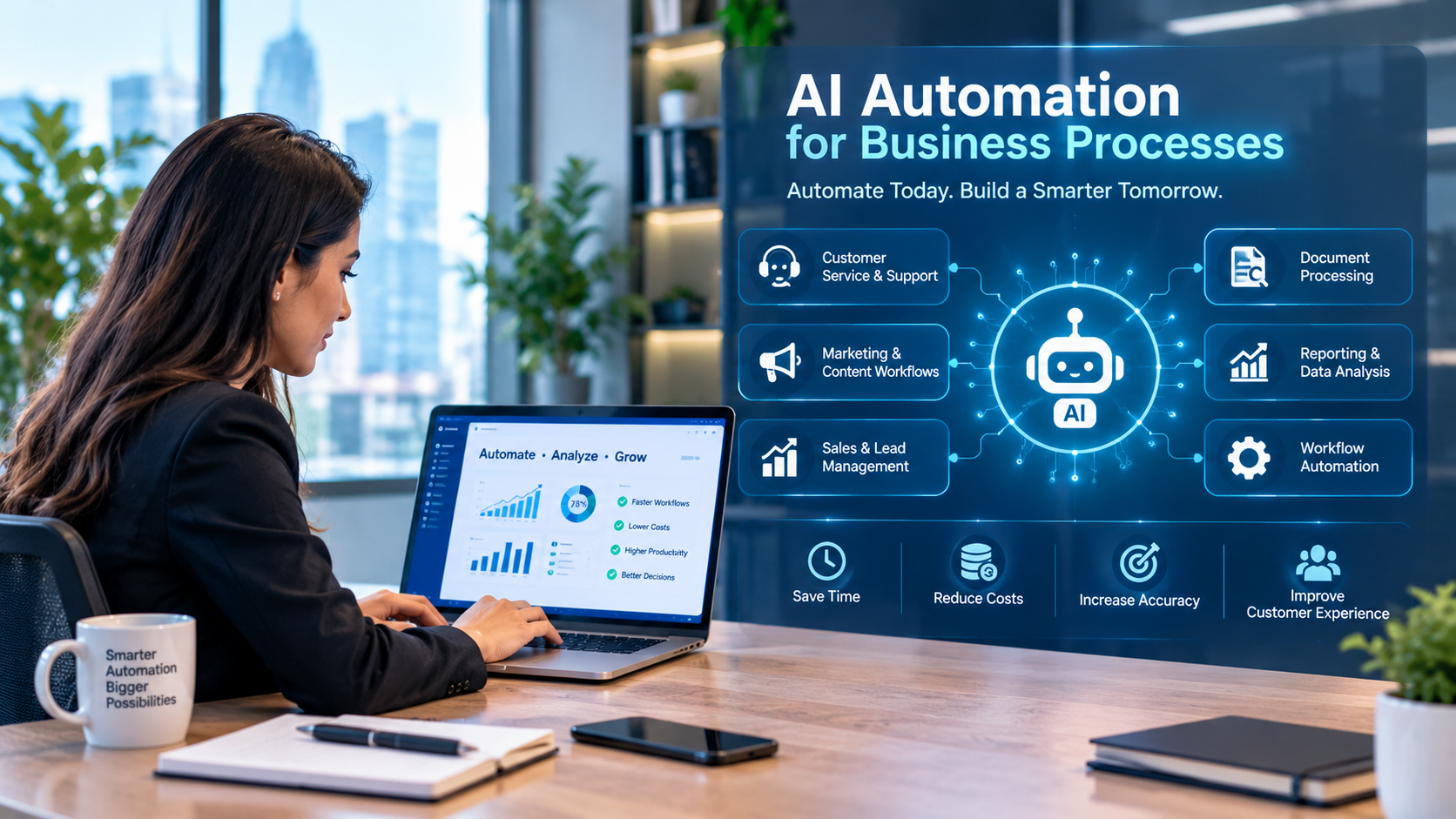
Businesses are constantly looking for ways to improve productivity, reduce operational costs, and deliver better customer experiences. Artificial intelligence is making these goals more achievable through intelligent automation. AI automation for business processes combines AI technologies with automated workflows to help organizations complete tasks faster, manage information efficiently, and make better decisions.
However, successful automation requires more than selecting software. Businesses need to identify suitable processes, choose the right solutions, and ensure automation supports their wider objectives.
What Is AI Automation for Business Processes?
AI automation uses artificial intelligence to perform or support tasks that traditionally require manual effort. Unlike basic automation, which follows predefined rules, AI-powered systems can analyze information, recognize patterns, interpret language, and assist with more complex workflows.
Examples include automated customer support, document processing, email classification, sales forecasting, and intelligent reporting. These applications help businesses reduce repetitive work while allowing employees to focus on higher-value responsibilities.
Why Businesses Are Adopting AI Automation
Manual processes can consume valuable time, increase the likelihood of errors, and slow down business operations. AI automation helps organizations address these challenges by improving consistency and streamlining workflows.
Businesses can use automation to process enquiries, organize customer information, generate reports, and manage routine administrative tasks. These improvements can support faster responses, more efficient resource allocation, and better operational performance.
When combined with a clear AI transformation and strategy, automation becomes part of a broader plan for business improvement rather than an isolated technology investment.
Key Business Processes That AI Can Automate
1. Customer Service and Support
AI-powered chatbots and virtual assistants can answer common questions, provide information, and direct enquiries to the appropriate team. They can help businesses respond more quickly while allowing human representatives to handle complicated customer issues.
Human oversight remains important when requests involve sensitive information, unusual circumstances, or complex decisions.
2. Marketing and Content Workflows
Marketing teams can use AI to support content research, organize campaign information, categorize enquiries, and personalize communications. Automation can also help coordinate repetitive activities across marketing platforms.
Businesses should review AI-generated content and messages to maintain accuracy, quality, and brand consistency.
3. Sales and Lead Management
AI automation can help organize incoming leads, update customer records, prioritize enquiries, and schedule follow-ups. These capabilities help sales teams manage opportunities more efficiently and reduce the risk of overlooking potential customers.
4. Reporting and Data Analysis
Preparing reports manually can take considerable time. AI-powered tools can summarize information, identify patterns, and assist with routine reporting.
Businesses can use these insights to monitor performance, identify operational problems, and make more informed decisions.
How to Implement AI Automation Successfully
Successful implementation starts with identifying repetitive tasks that consume significant time or create operational bottlenecks. Businesses should evaluate each opportunity based on potential benefits, implementation costs, complexity, and associated risks.
Next, organizations should assess their existing systems and data to determine which tools can integrate with their workflows. Starting with a small pilot project allows teams to test performance and resolve problems before expanding automation.
Employee training is equally important. Teams need to understand how automated processes work, when human intervention is necessary, and how to identify errors.
Organizations should also establish measurable indicators, such as processing time, error rates, customer response times, and operating costs. Regular monitoring helps determine whether automation is delivering the expected results.
Common AI Automation Challenges
Despite its advantages, AI automation can introduce challenges. Poor data quality may affect output accuracy, while incompatible software can complicate integration. Employees may also require time and training to adapt to new workflows.
Businesses should address these concerns through careful planning, appropriate security controls, employee involvement, and regular performance reviews. Responsible implementation helps organizations manage risks while improving operational efficiency.
How Elevait Consulting Can Help
At Elevait Consulting, we recognize that effective automation begins with understanding business needs. Organizations require practical solutions that address specific challenges and support measurable outcomes.
Through AI strategy consulting, businesses can identify promising automation opportunities, establish implementation priorities, and develop a roadmap aligned with their goals. This approach helps organizations make informed technology decisions without introducing unnecessary complexity.
Whether your business wants to streamline administration, improve customer service, or optimize internal workflows, a structured approach can help you identify the right opportunities.
Transform Your Business with AI Automation
AI automation offers businesses an opportunity to improve productivity, streamline operations, and make better use of their resources. By choosing suitable processes, preparing employees, and measuring performance, organizations can build automation systems that deliver lasting value.
Ready to simplify your business operations? Contact Elevait Consulting today to explore AI automation opportunities and discover practical ways to improve efficiency and support sustainable growth.





Leave a Reply